
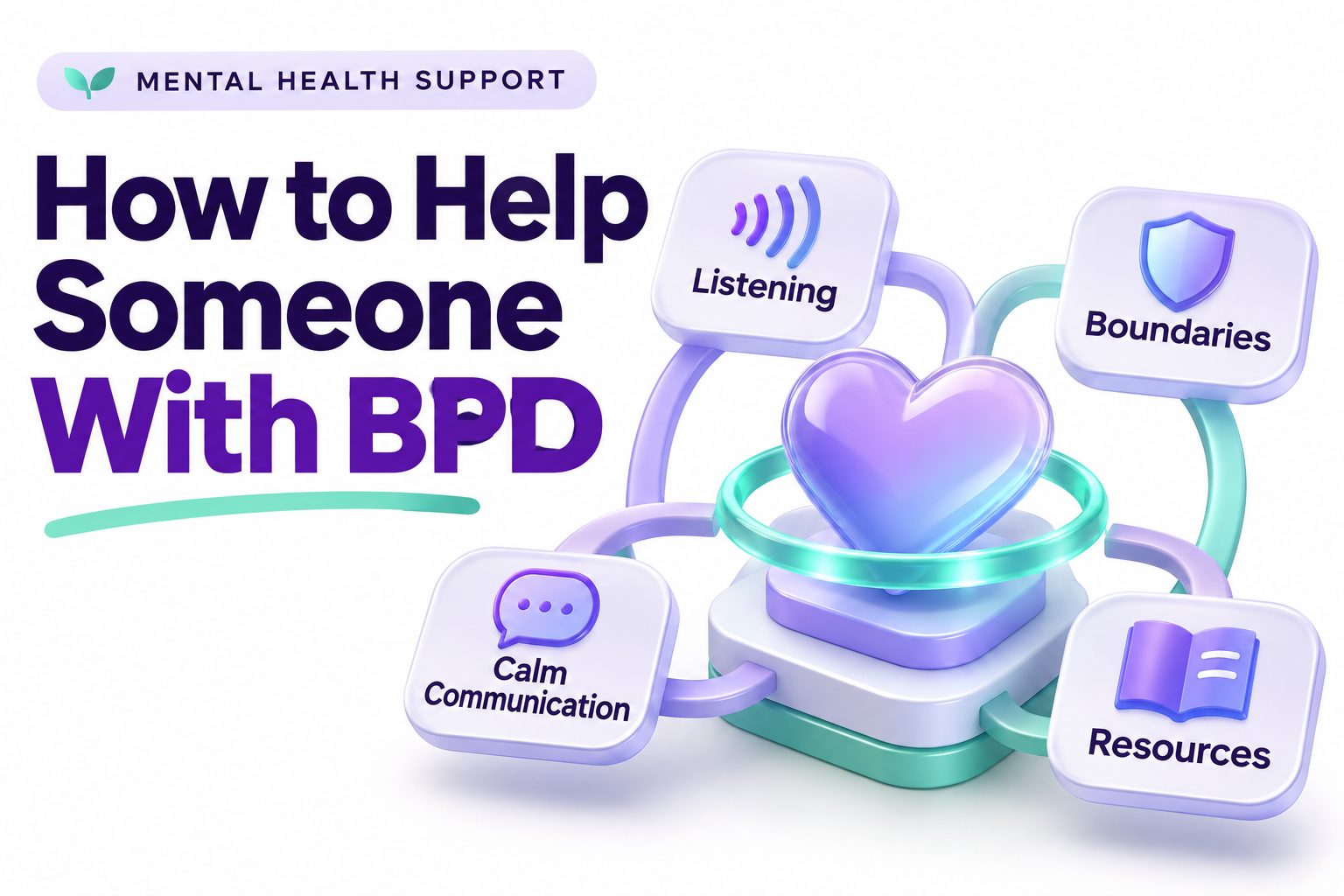
Supporting someone with borderline personality disorder can feel confusing, especially when emotions shift quickly or ordinary disagreements become intense. Learning how to help someone with BPD starts with a balanced approach: take their feelings seriously, communicate calmly, encourage professional treatment, and maintain clear limits around what you can realistically provide.
You do not need to become the person’s therapist or solve every crisis. In fact, steady, predictable support is usually more helpful than repeatedly rescuing them from distress. Listening without judgment, validating emotions without agreeing with harmful behavior, and following an agreed crisis plan can make difficult situations safer and less overwhelming.
This article explains what supportive communication sounds like, how to set boundaries without making them feel like punishment, and how to respond when self-harm or suicide is mentioned. It also covers treatment, conflict, daily support, caregiver well-being, and circumstances in which stepping back may be necessary. BPD affects people differently, so these strategies should be adapted to the individual, their treatment plan, and the nature of your relationship.
What Helpful Support for BPD Really Looks Like
Borderline personality disorder, or BPD, can affect emotional regulation, self-image, impulse control, and relationships. A person may experience intense fear of rejection, rapidly changing emotions, chronic emptiness, anger, or self-harming urges. These experiences are real and painful, even when their interpretation of a situation differs from yours.
Helpful support combines warmth with consistency. You can care deeply while refusing verbal abuse, unsafe behavior, or demands that exceed your capacity. The aim is not to prevent every uncomfortable emotion. It is to help the person move through distress without reinforcing destructive patterns or taking away their responsibility for recovery.
Learn About BPD Without Reducing the Person to a Diagnosis
Reliable information can make behavior that once seemed inexplicable easier to respond to. For example, repeated requests for reassurance may reflect intense fear of abandonment rather than a calculated attempt to control you. Recognizing the fear can help you address the emotion while still limiting repetitive or disruptive behavior.
At the same time, avoid interpreting everything through the diagnosis. People with BPD have individual personalities, preferences, strengths, and histories. Not every disagreement is a symptom, and a diagnosis never excuses cruelty or violence. Ask what support helps this particular person instead of assuming that one approach works for everyone.
Important facts to keep in mind include:
- BPD is a recognized mental health condition, not a character flaw.
- Symptoms vary in type, frequency, and severity between individuals.
- Many people improve substantially with suitable treatment and sustained support.
- Psychotherapy is the main treatment; medication may be used for specific symptoms or co-occurring conditions.
- A person can experience genuine emotional pain while still being responsible for their actions.
- Recovery is rarely linear. A setback does not mean treatment has failed.
- Friends and relatives can help, but they cannot replace trained mental health professionals.
Communicate in a Calm, Validating Way
Validation means acknowledging that an emotion makes sense from the person’s perspective. It does not require you to agree with every conclusion, accusation, or demand. You might say, “I can see that the delayed reply felt like rejection,” without agreeing that you deliberately ignored or abandoned them.
Keep your language simple when emotions are running high. Long explanations, rapid questioning, or attempts to prove someone wrong can increase distress. Speak slowly, focus on one issue, and allow time for the person to respond. Save detailed problem-solving for a calmer moment when both of you can think more clearly.
Validation Phrases That Sound Natural
Useful validation is specific rather than automatic. “That sounds really painful” is more meaningful than repeatedly saying, “I understand.” Reflect what you hear: “You were expecting me to call, and when I didn’t, you felt forgotten.” This confirms the emotional experience without accepting an inaccurate claim about your intentions.
Avoid adding an immediate correction after every validating statement. Saying, “I know you’re upset, but you’re overreacting,” cancels the validation. A better response is, “I can see this has hit you hard. Let’s pause, then talk about what happened when we’re both calmer.”
Listen Before Offering Solutions
Ask whether the person wants listening, practical help, or space. They may need to express an emotion before they can consider a solution. You could say, “Would it help if I listened, or do you want us to work out the next step together?” That small choice can reduce helplessness.
Listening does not mean staying in an endless or abusive conversation. You can acknowledge the distress and set a time boundary: “I can talk for twenty minutes now, and I’ll listen. After that, I need to get ready for work.” Predictable limits are often kinder than suddenly ending the conversation.
Set Boundaries That Are Clear and Consistent
Boundaries describe what you will do, not what you can force another person to do. “You need to stop shouting” is a demand. “If shouting continues, I will end the call and we can try again later” is a boundary because it identifies an action within your control.
Explain important limits during a calm period whenever possible. State the reason briefly, describe the consequence, and follow through consistently. Changing the rule after intense pressure may provide short-term relief but can teach both people that escalation is the only reliable way to negotiate.
Make Boundaries Predictable Rather Than Punitive
A healthy boundary protects safety, time, privacy, finances, or emotional well-being. It should not be used to frighten someone into compliance. Threatening to disappear, withdraw affection, or disclose private information can intensify abandonment fears and damage trust.
Use neutral, respectful language: “I care about you, and I won’t continue a conversation where either of us is insulting the other. I’m going to take thirty minutes, and I’ll message you at 7:00.” Give a realistic reconnection time only when you intend to keep it.
Do and Don’t Guide
| Do | Don’t |
| — | — |
| Acknowledge the emotion before discussing facts | Call the person dramatic, irrational, or attention-seeking |
| Use short, direct statements during conflict | Deliver a long lecture while emotions are high |
| Set limits based on actions you control | Make threats you cannot or will not carry out |
| Follow through calmly and consistently | Change every boundary after pressure or guilt |
| Ask what kind of support is wanted | Assume you must fix the problem immediately |
| Respect privacy within safety limits | Promise secrecy when someone may be in danger |
| Encourage professional help | Present yourself as the person’s therapist |
| Revisit the issue after both people settle | Use silence or disappearance as punishment |
Encourage Effective Professional Treatment
Psychotherapy is the primary treatment for BPD. Dialectical behavior therapy, commonly called DBT, was developed specifically for patterns involving severe emotion dysregulation and self-destructive behavior. It teaches mindfulness, distress tolerance, emotion regulation, and interpersonal effectiveness. Other structured therapies may also be suitable depending on the person and available services.
Offer practical assistance without taking control. You might help research licensed clinicians, provide transportation, or sit nearby while the person makes an appointment. If they consent, ask how you can support treatment goals at home. Respect their confidentiality and do not contact their clinician behind their back unless urgent safety concerns justify it.
Responding to Treatment Resistance
Someone may avoid treatment because of cost, previous harmful experiences, shame, hopelessness, or fear of being judged. Ask what is getting in the way rather than assuming they do not want to recover. Address practical barriers where possible, such as transportation, insurance questions, waiting lists, or finding a clinician with BPD experience.
Keep encouragement specific and realistic. Instead of saying, “Therapy will fix everything,” try, “A therapist could help you develop ways to get through these intense moments safely.” If the first provider is not a good fit, help the person consider another qualified professional rather than abandoning treatment altogether.
The Role and Limits of Medication
Medication is not generally considered the main treatment for BPD itself. A clinician may prescribe it for particular symptoms or co-occurring conditions such as depression, anxiety, or another diagnosed disorder. Medication decisions should be made with a qualified prescriber who can assess benefits, interactions, and side effects.
Do not advise someone to stop, increase, or share medication. If side effects or concerns arise, encourage them to contact the prescriber before making changes. Helping with reminders may be appropriate when the person requests it, but medication management should not become a test of loyalty or obedience.
Prepare for Self-Harm and Suicide Risk
References to self-harm or suicide must be taken seriously, even if similar statements have occurred before. Asking directly, “Are you thinking about killing yourself?” does not plant the idea. It creates an opportunity to identify immediate danger and connect the person with appropriate help.
Learn the person’s warning signs and crisis resources during a stable period. A written safety plan may identify triggers, coping strategies, supportive contacts, clinicians, crisis services, and steps for reducing access to lethal means. Ideally, the plan should be created with a mental health professional rather than improvised during an emergency.
Steps During a Mental Health Crisis
1. Stay calm and ask directly about immediate danger.
Find out whether the person is thinking about suicide or serious self-harm, whether they have a plan, whether they have access to the method, and whether they intend to act soon. Do not debate, shame, or challenge them to prove the threat.
2. Listen without promising secrecy.
Tell them you are glad they spoke up. Explain that safety comes before confidentiality when a life may be at risk. Avoid minimizing statements such as “You have so much to live for” or “You would never actually do it.”
3. Follow the existing crisis or safety plan.
Contact the person’s clinician, crisis team, or another resource listed in the plan when appropriate. If you are in the United States, call or text 988 for crisis support. Elsewhere, use the relevant local crisis line or health service.
4. Reduce immediate danger when it is safe.
If possible, help create distance from weapons, large quantities of medication, or other lethal means. Do not put yourself in physical danger or attempt an intervention beyond your ability.
5. Contact emergency services for imminent danger.
Call local emergency services if the person has attempted suicide, is about to act, cannot remain safe, or presents an immediate threat to someone else. Give responders clear information about the risk, location, available means, and known medical concerns.
6. Arrange follow-up after the immediate crisis.
A crisis response should not end once the intensity falls. Encourage contact with the treatment team and review what helped. You may also need support after a frightening event.
For more guidance on recognizing urgent warning signs, see [Internal Link: Mental Health Crisis Support].
Handle Conflict Without Adding More Intensity
Arguments can accelerate when each person feels unheard or threatened. Notice early signs such as faster speech, repeated accusations, raised voices, or an urge to send multiple messages. Suggest a pause before the exchange becomes unmanageable, and state when communication can resume.
During the discussion, focus on one current behavior rather than making global judgments. “I felt hurt when you shared my private message” is more workable than “You always ruin everything.” Avoid diagnosing the person during conflict or using BPD as a weapon against them.
Repair the Relationship After an Argument
Returning to a disagreement matters. Acknowledge your part without accepting responsibility for everything: “I should not have raised my voice. I’m sorry for that.” A sincere, specific apology can coexist with a firm boundary about the other person’s behavior.
Discuss what could be done differently next time. Perhaps either person can request a twenty-minute pause, use a designated phrase when feeling overwhelmed, or move a difficult conversation from text to a scheduled call. The goal is a realistic adjustment, not a promise that conflict will never happen again.
Avoid Text-Based Escalation
Text messages lack tone and can be reread in ways that intensify distress. When an exchange becomes repetitive or hostile, propose switching formats or taking a break. Do not send dozens of explanations in an attempt to eliminate every possible misunderstanding.
A helpful message might read: “I care about resolving this, but texting is making it worse. I’m going to stop for now. I can call tomorrow at 10:00.” Keep the message brief and follow through on the stated time.
Build Stability Through Everyday Support
Regular routines can reduce avoidable stress, though they are not a cure. Encourage balanced sleep, meals, movement, appointments, and manageable daily responsibilities. Invite rather than supervise: “Would you like to take a walk?” is more respectful than monitoring whether the person has followed every health recommendation.
Notice effort as well as outcomes. Attending therapy, using a coping skill, delaying an impulsive response, or repairing a disagreement may represent meaningful progress. Praise the specific behavior without becoming overly enthusiastic or treating the person like a child.
Everyday Support Checklist
□ Ask what support is useful instead of guessing.
□ Keep plans and communication as predictable as reasonably possible.
□ Give notice when arrangements must change.
□ Recognize effective coping and responsible choices.
□ Encourage skills from therapy without policing their use.
□ Make room for ordinary, enjoyable activities unrelated to BPD.
□ Respect the person’s privacy and independence.
□ Avoid taking over tasks they are able to handle.
□ Keep your own commitments, friendships, and routines.
□ Review boundaries when circumstances change.
Common Mistakes That Can Make Things Harder
One common mistake is trying to eliminate all distress. Reassuring someone for hours, canceling every obligation, or repeatedly solving consequences may unintentionally make them more dependent on you. Compassionate support should help preserve the person’s agency rather than communicate that they cannot cope without rescue.
Another mistake is treating emotional reactions as manipulation by default. Behavior can affect you negatively even when it comes from fear, pain, or limited coping skills. Respond to the impact and set limits without claiming to know the person’s motives.
Invalidating or Arguing About Feelings
Facts matter, but an intense moment is rarely the best time to litigate every detail. Statements such as “There is no reason to feel that way” can increase shame and conflict. A feeling can be acknowledged even when the belief attached to it is inaccurate.
Try separating emotion from interpretation: “I believe that you feel rejected. I did not intend to reject you, and I want to explain what happened when we’re calmer.” This preserves your perspective while making room for theirs.
Becoming the Sole Source of Support
When one friend, partner, or relative becomes responsible for every crisis, both people are placed under unsustainable pressure. Encourage a wider support network that may include clinicians, peer groups, trusted relatives, friends, and crisis services.
Do not agree that you are the only person who can help. You can say, “I care about you, but I cannot be available at every hour. Let’s identify other people and services you can contact.” Diversifying support protects the relationship and improves safety.
Using Labels During Disagreements
Comments such as “That is your BPD talking” dismiss the person and close down communication. Address observable behavior instead: “You have called me six times while I’m working. I won’t answer further calls today, but I can speak at 6:00.”
Avoid stigmatizing descriptions such as “crazy,” “toxic,” or “impossible.” You may need to name harmful behavior plainly, but the language should focus on what happened and what must change.
Protect Your Own Mental and Physical Health
Supporting someone with intense emotional needs can lead to exhaustion, anxiety, resentment, or hypervigilance. Caring for yourself is not abandonment. It helps you make sound decisions and remain consistent rather than cycling between overinvolvement and abrupt withdrawal.
Maintain sleep, work, exercise, friendships, medical care, and private time. Consider your own therapist or a family education program, preferably separate from the person’s clinician. Carer groups can reduce isolation and teach communication, validation, problem-solving, and crisis-planning skills.
For more ways to maintain healthy limits, see [Internal Link: Setting Boundaries in Relationships].
Practical Ways to Preserve Your Capacity
- Schedule regular time when you are unavailable except for genuine emergencies.
- Silence nonurgent notifications during work, sleep, or restorative activities.
- Speak with someone trustworthy while respecting the person’s privacy.
- Notice physical signs of stress, including poor sleep, headaches, or constant tension.
- Decide in advance what behavior will end a visit or phone call.
- Keep emergency contacts accessible so you are not the entire crisis plan.
- Seek professional support if guilt, fear, or resentment is affecting daily life.
- Reassess your role if supporting the person is damaging your health or safety.
Adapt Support to Your Relationship
A partner may be closely involved in routines, finances, or crisis planning, while a friend may provide companionship and occasional emotional support. Parents of an adult with BPD face different responsibilities from parents of a minor. Your role should reflect consent, proximity, capacity, and legitimate obligations.
Do not accept responsibilities simply because the person assigns them to you. Discuss what you can offer reliably. A modest commitment that you consistently keep is usually more useful than constant availability followed by burnout.
Supporting a Partner
Protect space for affection, shared interests, and ordinary conversation. A relationship cannot remain healthy if every interaction centers on symptoms or crises. Couples therapy may help when both partners consent and the clinician is qualified to work with severe emotion dysregulation.
Keep financial, sexual, and personal boundaries clear. Fear of abandonment does not remove the need for consent, privacy, or mutual respect. Relationship support should complement individual treatment rather than replace it.
Supporting a Friend
Be honest about your availability and avoid promising permanent or unlimited access. Invite the person to normal activities, not only conversations about distress. Friendship, humor, hobbies, and shared experiences can counter the feeling that the diagnosis defines their identity.
If you need distance, communicate it clearly where safe. A brief explanation and a realistic timeline are usually less distressing than unexplained disappearance. You still have the right to end contact if the relationship becomes abusive or unsafe.
Supporting a Family Member
Family patterns can become entrenched over years. Relatives may alternate between rescuing, criticizing, withdrawing, and trying to control treatment. Family therapy or a skills program can help everyone respond more consistently and reduce unproductive conflict.
Respect the adult family member’s confidentiality. Their clinician may listen to safety information you provide without being able to share treatment details. Unless the person consents or a legal exception applies, being a relative does not automatically grant access to private health information.
Know When to Step Back
Compassion does not require tolerating threats, stalking, violence, coercion, financial exploitation, or sustained verbal abuse. If the relationship is harming your safety or health, stronger distance may be necessary. Consult a therapist, domestic abuse service, legal professional, or emergency service when relevant.
Avoid using withdrawal as leverage during an argument. When possible and safe, state the boundary plainly: “I will not continue contact while threats are being made.” You can care about someone’s well-being while recognizing that you are not able to maintain the relationship in its current form.
Signs That Stronger Limits May Be Needed
- You fear the person will harm you, themselves, or someone else if you say no.
- Threats of self-harm are used to prevent you from leaving or setting limits.
- Your phone, location, money, or relationships are being monitored or controlled.
- You are frequently insulted, intimidated, hit, followed, or prevented from leaving.
- You have become unable to sleep, work, or attend to your own health.
- Children or other vulnerable people are being exposed to unsafe behavior.
- Repeated boundaries are ignored and the situation continues to worsen.
When immediate danger exists, prioritize safety and contact local emergency services. A diagnosis may help explain behavior, but it does not require anyone to remain in danger.
Conclusion
Helping a person with borderline personality disorder is less about finding perfect words and more about being calm, respectful, and consistent. Listen before solving, validate the emotion without endorsing harmful behavior, and set boundaries based on actions you can control. Encourage qualified treatment and support the person’s independence instead of becoming responsible for every decision or crisis.
Prepare for urgent situations before they happen. Take references to suicide or self-harm seriously, ask direct safety questions, use the established crisis plan, and involve crisis or emergency services when the danger is immediate. At the same time, protect your own sleep, relationships, health, privacy, and safety.
The most sustainable answer to how to help someone with BPD is to combine compassion with realistic limits. You can offer patience, practical assistance, and hope, but you cannot complete recovery on another person’s behalf. Reliable support, professional care, learned coping skills, and shared responsibility create a stronger foundation than rescue, argument, or unlimited availability.
Frequently Asked Questions
Can a person with BPD have healthy relationships?
Yes. Many people with BPD build stable, caring relationships, particularly when they receive suitable treatment and practice emotion-regulation and communication skills. Clear boundaries, honest repair after conflict, and realistic expectations can support healthier connections.
What should I say during a BPD episode?
Use calm, brief, validating language. Say what you observe, acknowledge the emotion, and ask what would help. Avoid arguing about facts, issuing threats, or offering complicated solutions until the person’s emotional intensity has decreased.
Should I give someone with BPD space?
Yes, when space is requested or conflict is escalating, provided there is no immediate safety risk. Explain how long the pause will last and when you can reconnect so that distance does not feel unpredictable or punitive.
Is BPD treatable?
Yes. Evidence-based psychotherapy can reduce symptoms, unsafe behaviors, and relationship difficulties. Progress may take time and include setbacks, but many people experience substantial improvement. A licensed mental health professional can recommend an appropriate treatment approach.
What should I do if someone with BPD threatens suicide?
Take the statement seriously and ask directly about their plan, means, and immediate intent. Contact crisis support or their treatment team, and call local emergency services if danger is imminent. Never promise to keep suicidal intent secret.